

Let me tell you what the Keurig K-Mini listing does not bother to mention. Yes, it is 5 inches wide. Yes, it will fit in spots where no other coffee maker on earth will go. But there are four things about daily life with this machine that the product page glosses over, and if any of them are dealbreakers for you, I want you to know before you buy.
I have a galley kitchen in a pre-war Cobble Hill building. My usable counter is 41 inches end to end, and two of those feet are spoken for by my toaster oven. Coffee real estate is tight. I have been using a K-Mini for about 14 months, and I have a pretty clear picture of who it is right for and who it is going to frustrate.
The Quick Verdict
The best coffee maker you can buy for tight counter space, but not the best coffee maker period. Know the difference before you commit.
Amazon Check Today's Price →If counter space is your constraint, nothing beats 5 inches wide
The K-Mini is the narrowest single-serve brewer on the market. If you have ruled out everything else because of footprint, this is your answer. Check today's price before it changes.
Amazon Check Today's Price on Amazon →How I Tested It (and Why I Am the Right Person to Tell You This)
I drink one cup of coffee every morning. Just one. I am not a coffee hobbyist. I do not pull espresso shots or weigh my beans. I want a hot, decent cup in under three minutes without taking up real estate I do not have. That makes me exactly the buyer Keurig designed the K-Mini for.
Over 14 months I have brewed somewhere north of 400 cups in this machine. I have used grocery-store pods, name-brand pods, and a reusable My K-Cup filter. I have tested the 6-ounce, 8-ounce, and 12-ounce brew sizes. And I have compared the output, honestly, against the drip machine I replaced and the Nespresso Vertuo Pop a neighbor uses. Here is what I found.
What Nobody Tells You: The Four Hidden Trade-Offs
This is the part that matters. These are not hidden defects. They are trade-offs that come with the design, and Keurig has no reason to headline them. But you should know about all four.
First: the brew temperature. The K-Mini brews between 192 and 197 degrees Fahrenheit. Coffee specialists will tell you the ideal extraction range is 195 to 205. That 3-to-8 degree gap is not catastrophic but it is real, and if you are using a pod variety with a light roast or a delicate single-origin blend, you will taste the difference as a slightly flat, under-extracted cup. Dark roasts hide it better. The machine is tuned for dark roasts and mainstream pods, not the premium stuff.
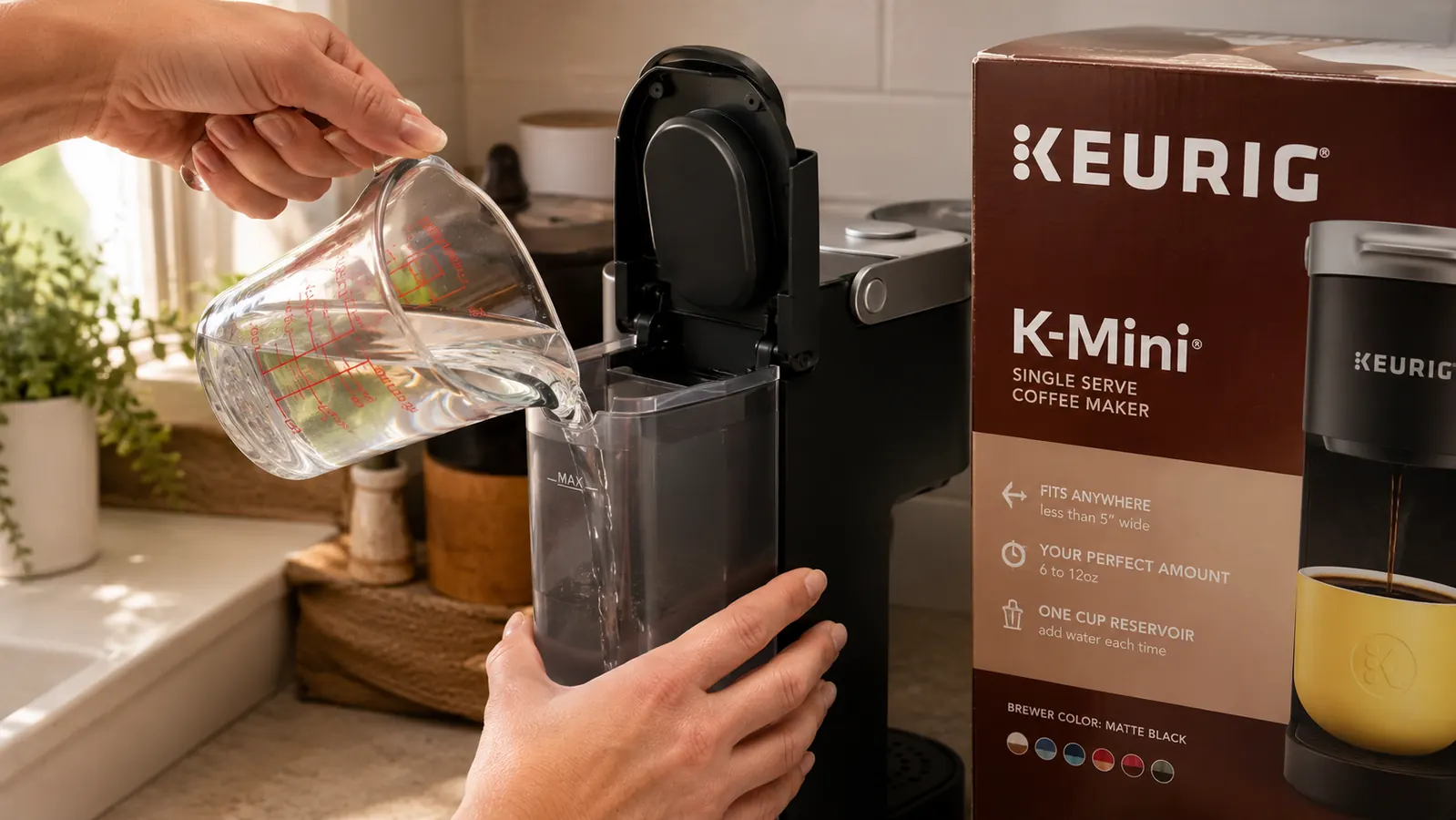
Second: the reservoir fills every single cup. There is no water tank. You pour fresh water in before every brew. For one person who makes one cup a day, this is genuinely fine. If you want to make two cups back to back, you pour twice. If someone else in the house wants coffee, they pour. It sounds trivial until the morning you are running late and you have to wait for a slow pour. This is the single most common complaint in the 107,000 reviews on Amazon, and it deserves more than a footnote.
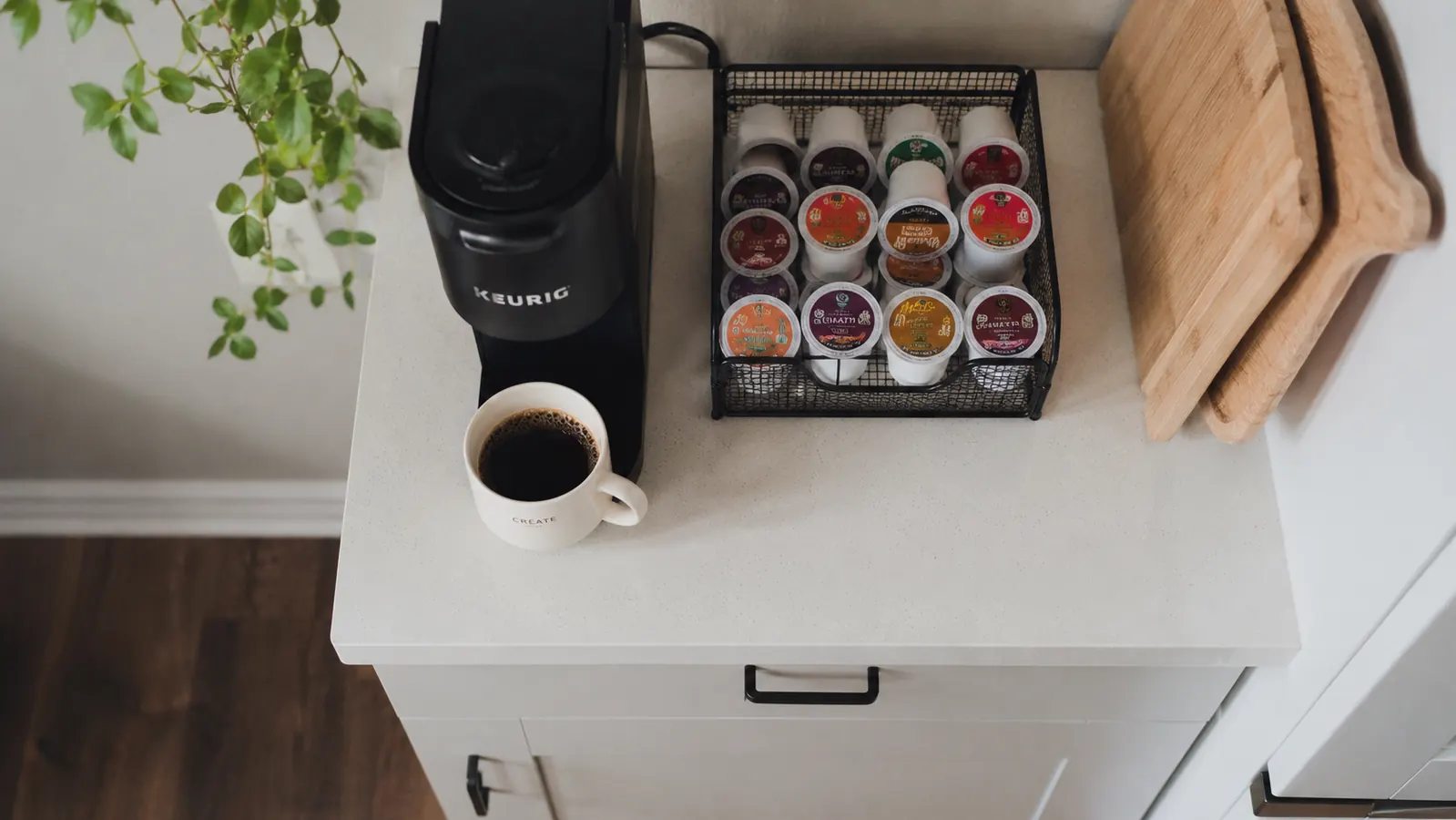
Third: the pod math. At roughly $1.00 to $1.20 per K-Cup pod, a single daily cup costs about $30 to $36 per month. A bag of good ground coffee brewed in a French press or a simple pour-over costs a fraction of that. The K-Mini saves counter inches but it charges a premium for the convenience. If you are budget-conscious, run the numbers before you commit to the pod ecosystem.
Fourth: the brew size trade-off. The 12-ounce setting gives you volume but dilutes the coffee noticeably. The 6-ounce setting is the richest cup this machine makes and the closest thing to a genuine strong coffee. Most people default to 8 ounces and find it acceptable. But if you want a big, bold travel-mug fill, you are going to be disappointed with the output at 12 ounces.
The Footprint Argument Is Completely Real
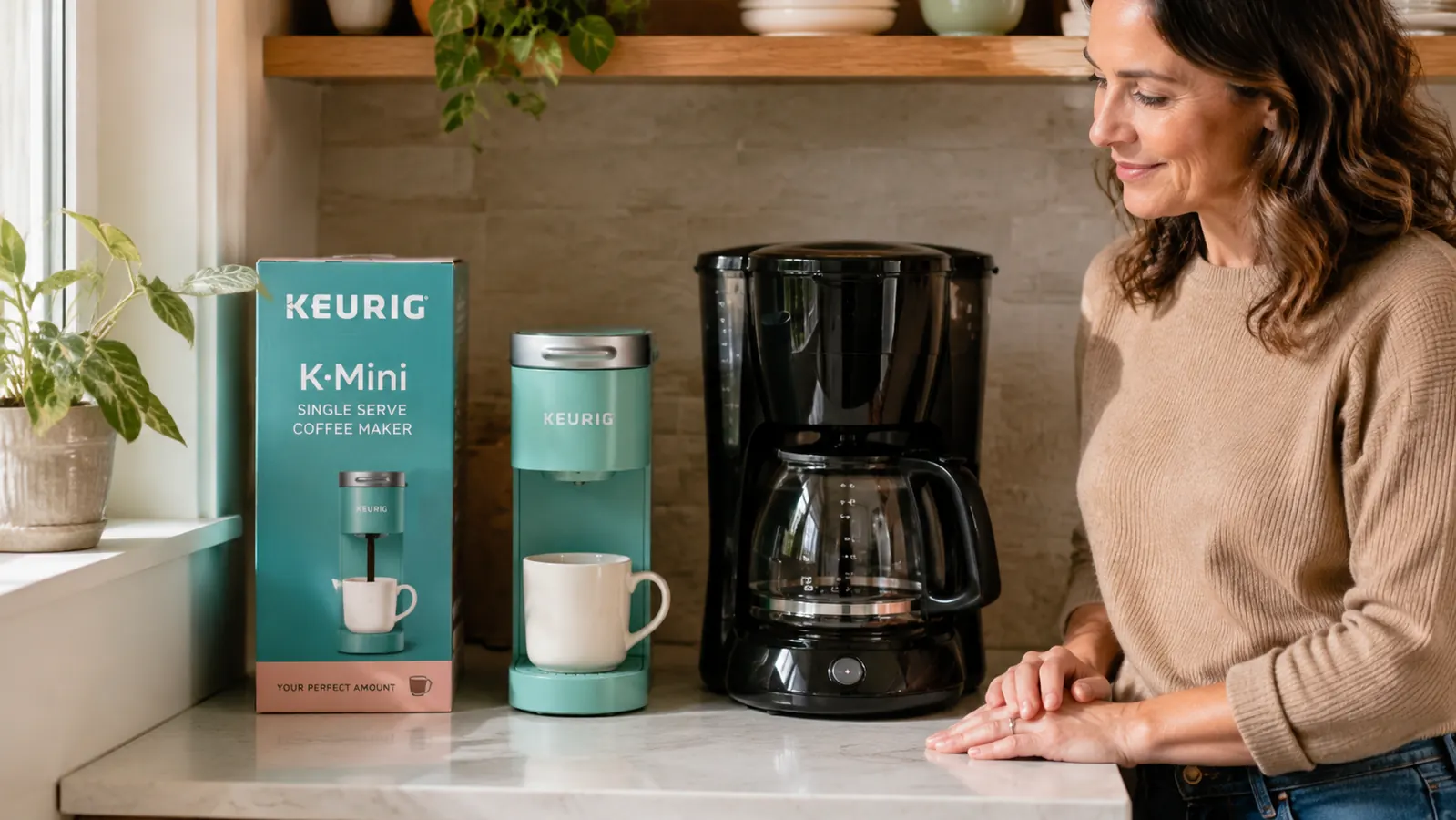
Here is where I want to give the K-Mini its full credit, because everything I just said should be weighed against the one thing it does that nothing else does. The machine is 5 inches wide. My measuring tape confirms it. That is narrower than a standard box of cereal. In a small kitchen, that number matters more than almost any feature spec.
The machine I replaced was an 11-inch-wide drip coffee maker. I gained six inches of usable counter when I switched. In a 41-inch galley kitchen, six inches is meaningful. It meant I could put a proper cutting board on the counter again without moving the toaster oven. That single change made my kitchen feel less claustrophobic.
The K-Mini also fits in places drip machines simply cannot go: the back corner of a college-dorm counter, a narrow hotel-room credenza, the side shelf in an RV, the window-adjacent sliver in a studio apartment. If your constraint is truly spatial, the K-Mini solves for it in a way no drip machine, no Nespresso, and no pod machine I have seen can match.
Six counter inches sounds trivial until you are the person who just got them back. In my galley kitchen, that was the difference between having a real cutting board down or not.
The Pod Cost Reality (With the Reusable Filter Fix)
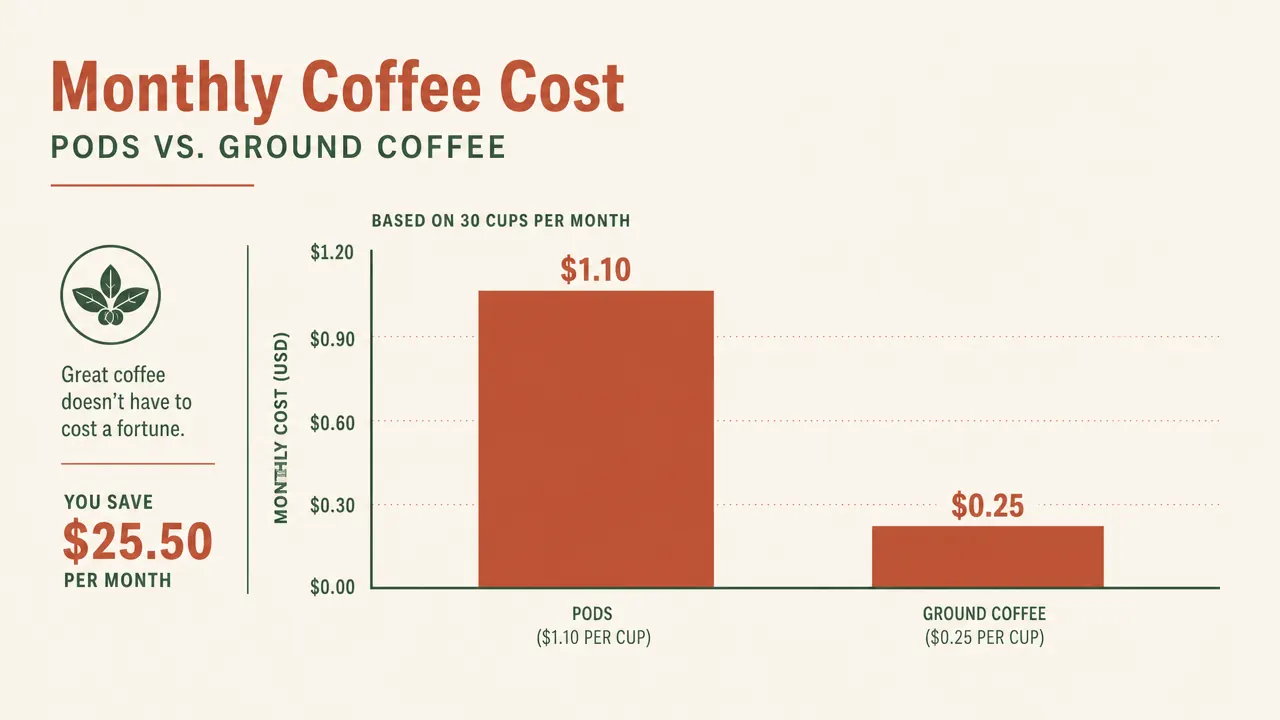
The pod math I mentioned above changes completely if you use the Keurig My K-Cup reusable filter. It drops into the K-Mini exactly like a standard pod, you fill it with whatever ground coffee you want, and you brew. The cup quality improves, the cost drops to the same range as pour-over, and you stop generating pod waste.
The catch is cleanup. The reusable filter has to be emptied and rinsed after every use. In a small kitchen where the sink is right there, this takes about 20 seconds. Some people find that unacceptable at 6:30 in the morning. Others consider it a fair trade for better coffee at lower cost. I use the reusable filter about four days a week and pods on the other three. Both options work; the right split depends on how much morning friction you can tolerate.
One thing I will say: the reusable filter noticeably improves cup quality. I tested it side by side with the same ground coffee I would use in a drip machine. The K-Mini with the reusable filter produced a cup I preferred to the drip machine I replaced. The capacity is small (about one tablespoon of coffee grounds), which limits how strong you can go, but for a 6-to-8 ounce cup it performs well.
The Speed and Convenience Argument
Here is where the K-Mini honestly wins. Preheat to first sip takes about 90 seconds. There is no carafe to wash, no permanent filter to replace, no measuring involved with pods. If you are someone who just wants coffee to appear with minimal steps, this machine is engineered for exactly that scenario.
I have had mornings where I timed myself: water in, pod in, button pressed, mug filled and me out the door in under four minutes including the preheat. For a single-person household where that is the only coffee transaction of the day, that speed is worth something real.
The machine is also quiet relative to most pod brewers. It is not silent, but the brew cycle noise is similar to a drip machine and significantly quieter than an espresso or Nespresso machine. In a studio apartment with thin walls, that is a legitimate feature.
How the Build Quality Holds Up
At the current price point, the K-Mini is plastic construction and it reads as such. The housing is lightweight. The water fill area shows mineral deposit staining if you do not descale every few months. The pod puncture needles can clog if you go a few weeks without cleaning them with a paper clip and rinse cycle. None of this is unusual for the price, but it is not a machine that feels premium.
After 14 months of daily use, my unit has had zero mechanical issues. It brews at the same speed it did on day one. The power button still clicks cleanly. The housing has a couple of faint scratches from moving it to clean under it, but nothing structural. For a machine at this price doing one job once a day, that track record is acceptable.
K-Mini vs Nespresso Vertuo Pop: The Space-Constrained Buyer's Actual Decision
If you are in a small kitchen and considering single-serve coffee, you are almost certainly also looking at the Nespresso Vertuo Pop. They occupy similar counter space, similar price ranges, and both promise convenience. Here is the honest version of that comparison.
The Vertuo Pop brews at a higher temperature with centrifugal extraction and produces a noticeably better-tasting cup. If coffee quality is your priority, it wins. But the Vertuo Pop is about 6 inches wide versus the K-Mini's 5, its pods cost more (closer to $1.50 each), and the pod ecosystem is smaller with less grocery-store availability. In my neighborhood, I can find K-Cup pods at the corner bodega three blocks away. Nespresso pods require a specialty order or a trip to a Williams Sonoma.
My verdict: if coffee taste is your priority and the extra inch does not matter, consider the Vertuo Pop. If pod availability, price, and absolute minimum footprint are your criteria, the K-Mini wins. They are solving slightly different problems for slightly different buyers. See our full Keurig K-Mini vs Nespresso Vertuo Pop comparison for the detailed breakdown.
What I Liked
- 5-inch width is genuinely unmatched for counter space savings
- 90-second preheat to first sip is fast for a morning routine
- Pod ecosystem is massive and available at most grocery stores
- Reusable filter option significantly improves cup quality and cuts pod costs
- Quiet brew cycle compared to espresso and Nespresso machines
- 14-plus months of daily use with zero mechanical issues in my unit
- Dead simple operation, no settings to configure
Where It Falls Short
- No water reservoir, fill the water before every single cup
- Brew temperature runs slightly below optimal for light roasts
- 12-ounce setting produces a noticeably weaker, diluted cup
- Pod cost at $1.00 to $1.20 each adds up fast versus ground coffee
- Plastic construction feels utilitarian, not premium
- Requires descaling every 2 to 3 months or performance degrades
- Pod needle clogs if not cleaned periodically with a paperclip
Who This Is For
You are the right buyer for the K-Mini if you drink one cup of coffee a day, you live alone or with one other person who has the same simple coffee habit, your counter is genuinely constrained, and you value speed and simplicity over coffee complexity. If you want coffee to take up almost no mental or physical space in your morning, this machine delivers on that. The trade-offs I described above will barely register for you.
It is also worth noting that the K-Mini tends to score well among people transitioning away from big drip machines specifically because they want less coffee-related overhead in their day. Less grounds, less carafe washing, less timer-setting. If that resonates, the K-Mini is designed for you. And if you want to dig deeper into why single-serve machines make sense for small kitchens specifically, our 10 reasons a single-serve coffee maker belongs in a small kitchen piece lays it out.
Who Should Skip It
Skip the K-Mini if you drink more than two cups a morning. Filling the reservoir twice before 7 a.m. gets old fast. Skip it if you are serious about coffee taste and already own a pour-over kit or a French press. The K-Mini will not match what you are used to. Skip it if you are budget-driven and not willing to invest in the reusable filter, because the per-pod economics are genuinely hard to justify compared to even a modest drip machine over a 12-month period.
And skip it if you want a machine that feels substantial. The K-Mini is lightweight plastic, and for some people that registers as cheap. It is not cheap for what it does, but it does not feel substantial in your hand the way a Nespresso or a higher-end Keurig model does. If the physical quality of the appliance matters to you, you will notice the compromise every time you pick it up to fill it.
The K-Mini earns its counter inches if you are the right buyer for it
At 5 inches wide it is still the narrowest single-serve brewer made. If the trade-offs above are things you can live with, or avoid with the reusable filter, it is a genuinely smart small-kitchen buy. Check today's price and available colors on Amazon.
Amazon Check Today's Price on Amazon →