
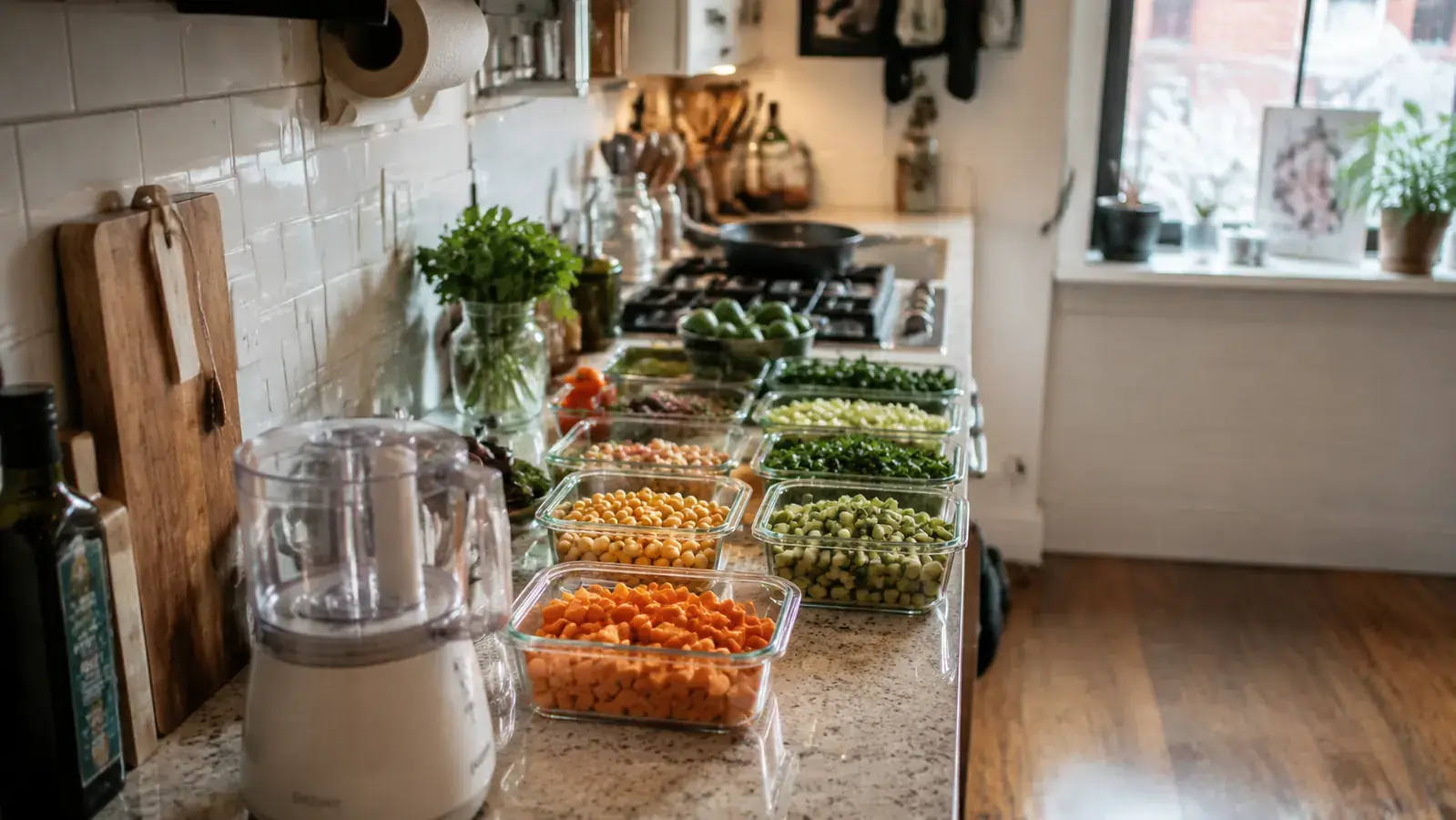
Sunday meal prep in a galley kitchen is a study in frustration. You have maybe four feet of usable counter, a cutting board that crowds your coffee cup off the edge, and a list of things to chop that makes your knife hand tired before you even get to the onions. I spent three years doing it the hard way in my Brooklyn apartment before I gave a 3-cup mini food processor a serious shot. That appliance now sits on my counter permanently, and it has earned every inch of the seven inches it takes up.
The Hamilton Beach Electric Vegetable Chopper and Mini Food Processor runs on 350 watts, holds three cups, and costs less than a dinner out. It is not a full-size food processor. It will not make bread dough or shred five pounds of carrots. But for the tasks that actually slow down a small-kitchen prep session, it is faster than any knife work and cleans up in under two minutes. This guide walks through five specific tasks, step by step, starting with the one that changed my Sunday routine the most.
Stop doing by hand what takes 8 seconds in a machine
The Hamilton Beach 3-Cup Mini Food Processor has a 4.6-star rating from over 36,000 buyers. At its current price it's the easiest swap you can make for a small-kitchen prep routine.
Amazon Check Today's Price on Amazon →Step 1: Mince a Full Week of Garlic in 8 Seconds
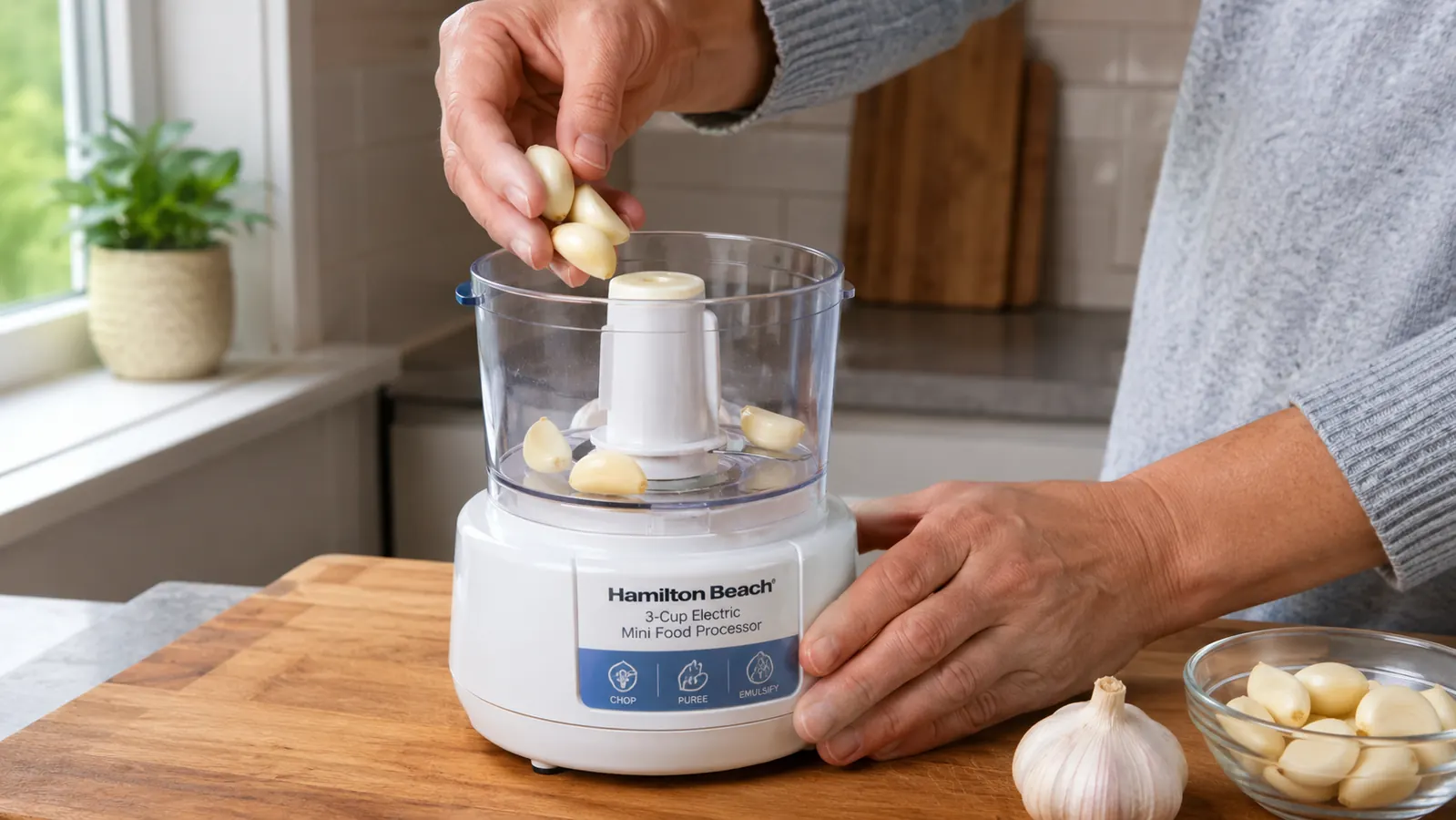
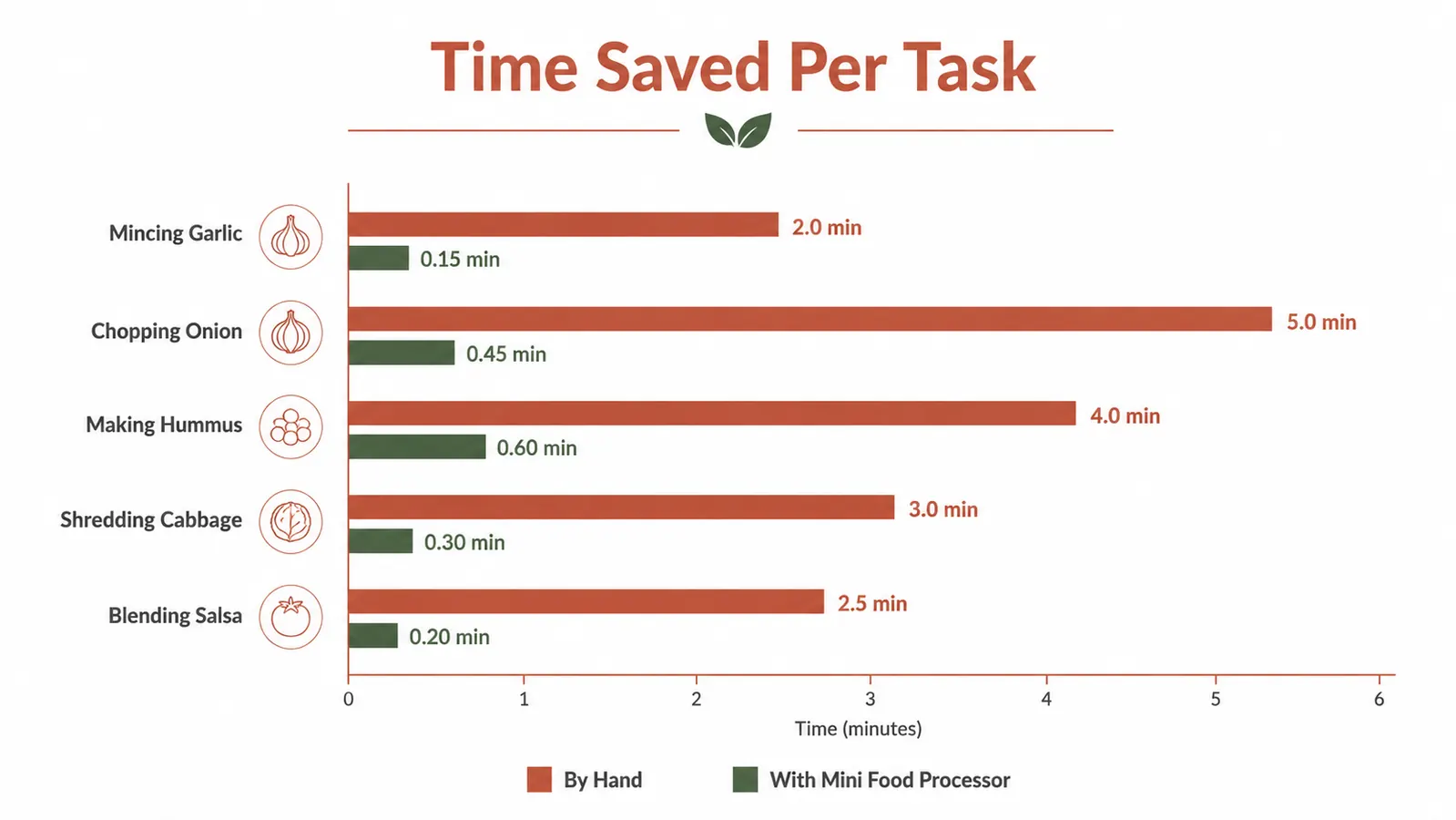
Garlic is the single biggest time sink in my prep routine. I cook with it every day, and mincing it by hand with a chef's knife takes at least two minutes per meal if I want it fine enough to not leave raw chunks in a sauce. The mini processor eliminates this entirely. Peel a full head, roughly eight to ten cloves, drop them in the bowl, and pulse three times. Done. You get evenly minced garlic ready to jar and refrigerate for the week.
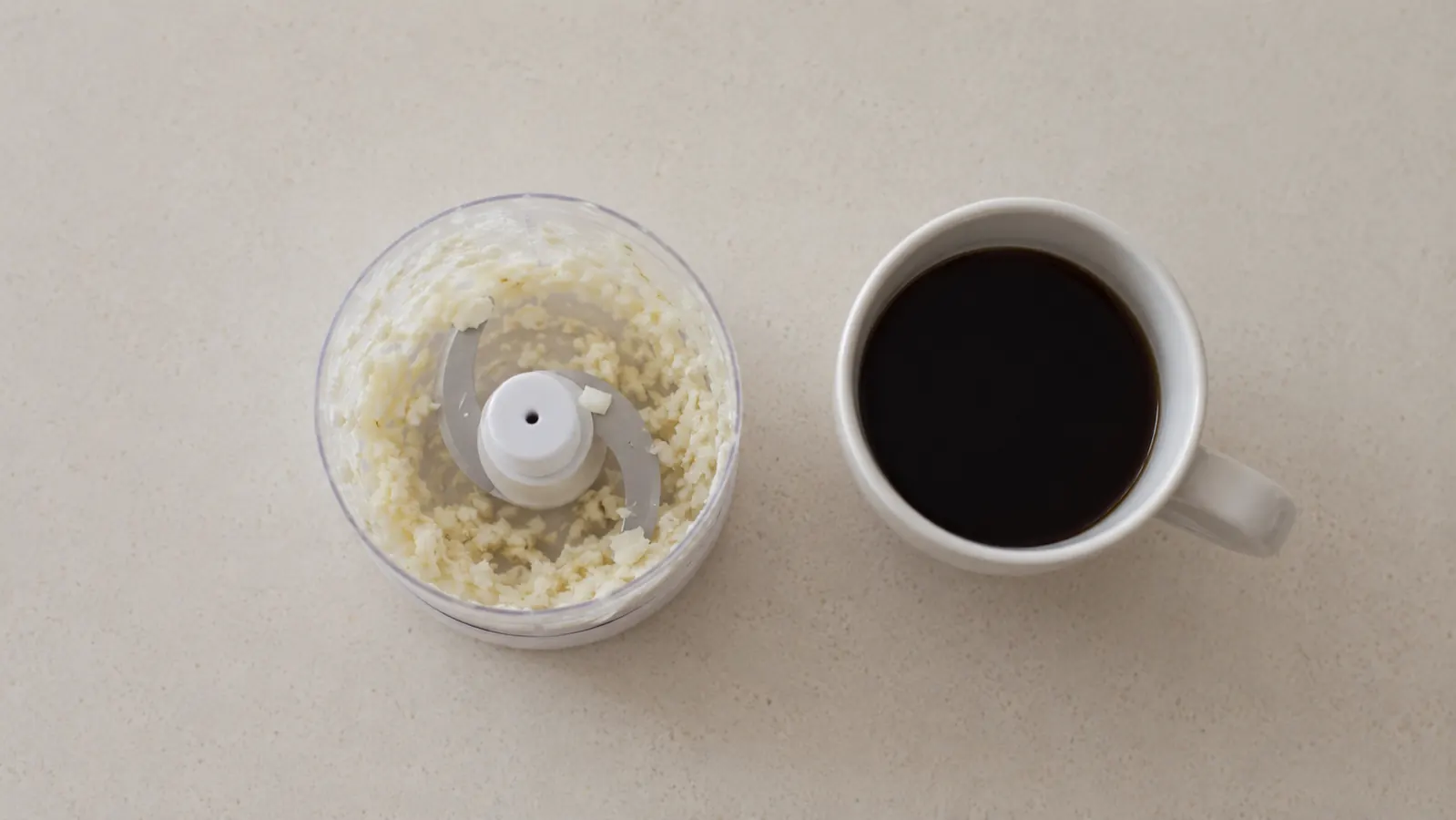
One thing to watch: do not over-process garlic or it turns into a paste. Three sharp pulses, not a continuous run. Check after each one. You want pieces the size of a grain of rice, not mush. Transfer immediately to a small glass jar with a tight lid and refrigerate. It keeps well for five to seven days and saves you two minutes every single time you cook. Over a week of daily cooking that is more than ten minutes back in your pocket, from one prep task.
Step 2: Chop One Full Onion Without Crying Over a Cutting Board
Onions are where I used to lose patience entirely. My eyes water badly, I have limited counter space, and chopping an onion fine enough for a soffritto takes real effort. The mini processor handles a halved onion in two pulses. Cut your onion in half, remove the papery skin, cut each half into four rough chunks, drop them in the bowl, and pulse twice. You get a consistent chop that would take three to four minutes by hand, done in fifteen seconds.
The one limit here: a 3-cup bowl fits one large onion at a time. If you are prepping for a household that cooks in volume, you will need to run two batches. For a one- or two-person apartment kitchen, one batch is usually enough for the week. I prep one onion on Sunday, keep it in a sealed container in the fridge, and pull from it through Friday. No crying. No lingering onion smell on my cutting board. No four-inch puddle of onion juice on my counter.
A 3-cup mini processor is not trying to replace your knife. It is trying to give you back the fifteen minutes of prep work you are too tired to do on a Sunday afternoon.
Step 3: Make Hummus From a Can of Chickpeas in Under 3 Minutes
Store-bought hummus comes in containers that are never the right size and always have too much tahini or not enough garlic. Making it at home used to require a full-size food processor or a blender and a lot of scraping. A mini food processor handles one can of chickpeas perfectly. Drain and rinse the can, add two tablespoons of tahini, one clove of garlic you already minced in Step 1, a squeeze of lemon, a pinch of salt, and two tablespoons of olive oil. Run the processor for thirty seconds, scrape the sides, run for another thirty seconds. Taste and adjust.
The texture from a 3-cup bowl is genuinely smooth because the small chamber keeps everything tight against the blade. You get better emulsification than you do from a large processor where the ingredients get thrown around. I add a splash of cold water in the last ten seconds if I want it looser. Total time from can to container: under three minutes. Hummus keeps for five days in the fridge and works as a protein-rich snack, a sandwich spread, or the base of a grain bowl sauce.
Step 4: Shred Cabbage for a Week of Slaws and Grain Bowls
This step surprises most people. A mini food processor with a standard chopping blade will not do long shreds like a mandoline, but it does a fine chop that works perfectly for grain bowls, tacos, and quick slaws. Cut a quarter head of cabbage into rough two-inch chunks. Fill the bowl no more than two-thirds full, which is about two cups for this size. Pulse four to five times in quick bursts. You get a coarse chop that is consistent and stores flat in a container without the cabbage drying out.
The key rule with any vegetable in a mini processor: do not overfill and do not over-pulse. Both produce mush. Fill to the two-thirds line, use short pulses rather than holding the button down, and stop the moment you hit the texture you want. Cabbage prepped this way holds up for four to five days, which covers most of the week. I keep it plain and add dressing at meal time so it stays crisp.
Step 5: Blend a Batch of Fresh Salsa in One Bowl
Fresh salsa from a blender is watery. Fresh salsa from a knife takes ten minutes and leaves tomato juice across your entire cutting board. A mini food processor makes chunky salsa with exactly the right texture in under a minute. Add two roma tomatoes quartered, half a jalapeno with seeds removed if you want mild heat, a quarter of a small white onion, a handful of cilantro, a squeeze of lime, and a pinch of salt. Pulse three times for a chunky salsa, five times for a smoother one.
The three-cup bowl fits this batch exactly with room to pulse without overflow. Keep the lid on firmly and hold it down with your palm on the first pulse because the tomatoes release liquid fast. The whole operation, including rinsing the bowl, takes four minutes. I make this every Sunday and it goes on eggs Monday, tacos Wednesday, and grain bowls Thursday. It keeps for five days and costs less per week than a jar of mediocre store salsa.
What Else Helps in a Small-Kitchen Prep Session
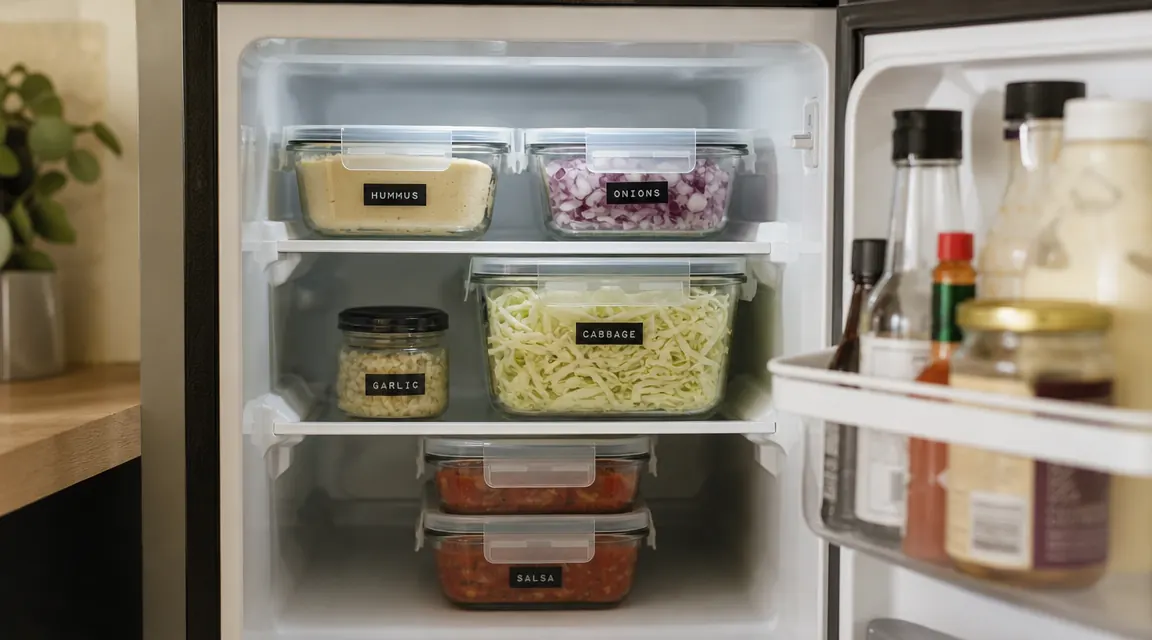
The mini food processor is the highest-leverage tool for cutting prep time in a small kitchen, but it works best when the rest of your setup is also tight. A single large glass container for each prepped ingredient means the fridge stays organized and you can see what you have. A roll of painter's tape and a marker for labeling lids takes two seconds per container and prevents the mystery jar problem at the end of the week. One good cutting board that fits your actual counter and gets rinsed between tasks. That is the whole system.
The other thing worth naming: cleanup is the reason people stop using small appliances. The Hamilton Beach bowl and blade come apart completely and are top-rack dishwasher safe. If you do not have a dishwasher in your apartment, which is most Brooklyn apartments, the bowl rinses clean under the tap in thirty seconds because the 3-cup size has no corners where food hides. This matters. If an appliance takes longer to clean than to use, it ends up in the cabinet and never comes back out. That does not happen here.
One honest limitation worth knowing before you buy: the 3-cup bowl size means you are batch-processing rather than doing everything at once. If you are prepping for four people or cooking for the entire week, you will run multiple batches. The motor handles it fine but the volume limit is real. For a one- or two-person household in an apartment kitchen, it is the right fit. For a family of four doing large-scale weekly prep, a 7-cup or 11-cup processor would serve you better, even if it costs you more counter space.
The Hamilton Beach 3-Cup: 7 inches of counter space, five prep tasks handled
Rated 4.6 stars across 36,000+ reviews. Check the current price on Amazon and see why it consistently makes the short list for small kitchens that need to do real cooking without real counter space.
Amazon Check Today's Price on Amazon →